Token Rotation in Cross-Border Subscription Flows: How Portable Terminals Align API Calls with Global Compliance Benchmarks
Theo Powell · Jul 30, 2026
Token Rotation in Cross-Border Subscription Flows: How Portable Terminals Align API Calls with Global Compliance Benchmarks
Token rotation practices have gained traction in subscription models that span multiple countries because they address both security and regulatory demands at the same time. Portable terminals now serve as key points where API requests get synchronized with rules from various jurisdictions. Data shows that organizations handling recurring charges across borders face increasing pressure to refresh tokens at regular intervals while maintaining uninterrupted service for customers. According to the PCI Security Standards Council, tokenization combined with rotation reduces the window during which stored credentials remain vulnerable to interception.
Core Mechanics of Token Rotation in Subscription Systems
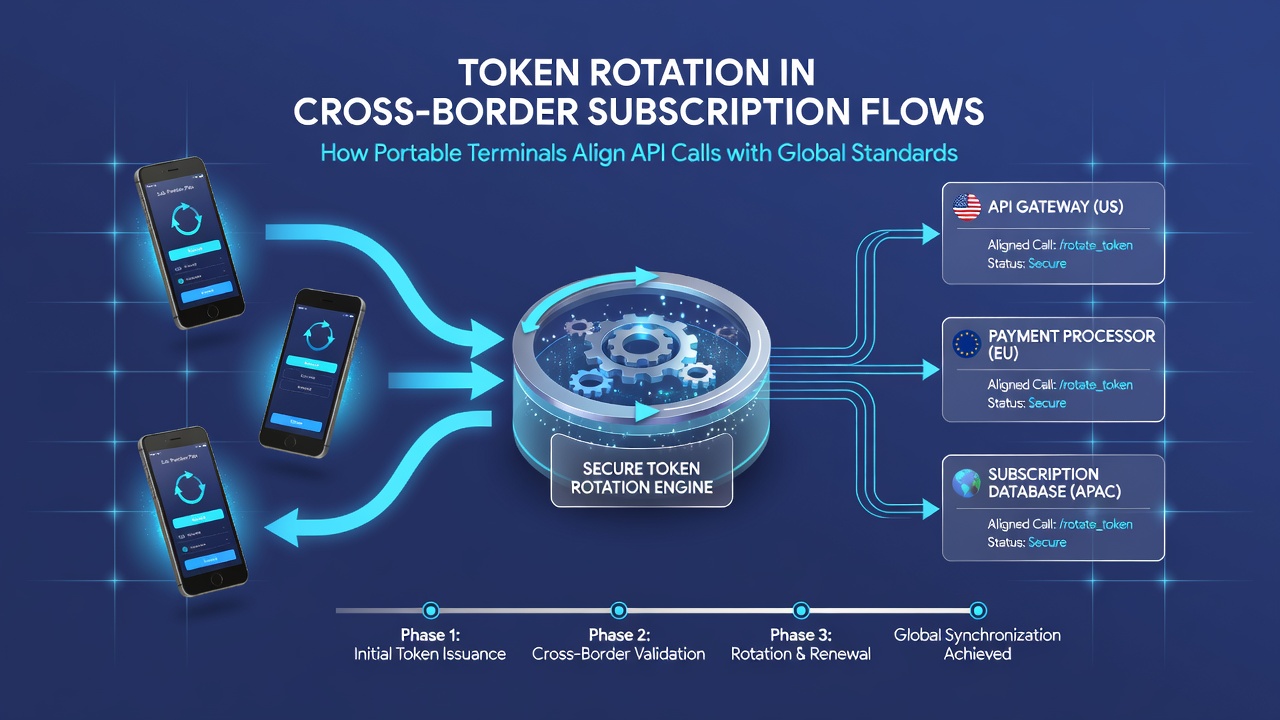
Token rotation works by replacing an existing token with a new one after a defined period or after a set number of transactions. This process occurs without exposing the underlying card details to the merchant or the terminal operator. In cross-border flows, the rotation must account for differences in data residency laws and reporting requirements that vary by region. Researchers at several payment networks have documented how portable devices trigger rotation events through API calls that query a central token vault before authorizing the next deduction. The sequence keeps authorization routes compliant because each new token carries updated metadata tied to the current regulatory snapshot.
Portable Terminals and API Synchronization
Portable terminals connect to backend systems through standardized API endpoints that request fresh tokens before each billing cycle in subscription arrangements. The devices pull compliance parameters such as encryption strength and data retention limits directly from the gateway, then apply those settings to the outgoing request. Studies from industry reports indicate that terminals equipped with real-time configuration modules experience fewer mismatches when operating under multiple regulatory frameworks simultaneously. Observers note that the alignment happens at the point of the API call, where the terminal checks the token age against jurisdiction-specific thresholds before proceeding with the charge.
Regulatory Benchmarks Across Regions
Global compliance benchmarks include requirements from the PCI Data Security Standard, the European Union's payment services directives, and frameworks issued by authorities in Canada and Australia. Each set of rules specifies intervals for token refresh and mandates logging of rotation events for audit purposes. As of July 2026, several updates to cross-border data transfer protocols are scheduled to take effect, requiring terminals to verify token validity against the newest retention limits before completing an API handshake. Those who manage subscription services report that portable hardware must therefore receive firmware patches in advance of these dates to avoid processing interruptions.
Implementation Patterns Observed in the Field
One documented case involves a network of mobile vendors operating across North America and Europe who integrated token rotation directly into their terminal firmware. The system generates a rotation request through the API whenever the terminal detects that the current token has reached 75 percent of its permitted lifespan under the strictest applicable rule set. Figures from payment processors show reduced incident reports after this approach was adopted, because each terminal maintains an internal compliance table that updates nightly from a central repository. Experts have observed that the pattern scales effectively when the API layer includes fallback logic for regions with differing rotation frequencies.
Challenges in Maintaining Alignment During Rotation
Latency in cross-border API responses can delay token replacement and create temporary gaps in authorization coverage. Portable terminals address this by caching the next valid token parameters locally while the primary request travels through international gateways. Research indicates that encryption key handoffs must occur over secure channels that meet the highest standard among the involved jurisdictions. When a terminal operates near a border, the device queries multiple compliance endpoints in sequence to confirm that the new token satisfies every relevant benchmark before the subscription charge is submitted.
Conclusion
Token rotation in cross-border subscription flows continues to evolve alongside portable terminal capabilities and shifting regulatory expectations. The alignment of API calls with global benchmarks depends on timely firmware updates, accurate compliance tables, and coordinated rotation schedules that respect the strictest rule in effect for any given transaction. Data from multiple regions confirms that terminals capable of executing these steps in sequence maintain higher uptime and lower exposure to compliance deviations.