The Evolution of Fraud Prevention Techniques in Payment Gateway API Development
Casey Zimmermann · Jul 2, 2026
Tracing Fraud Defense Innovations Across Payment Gateway API History
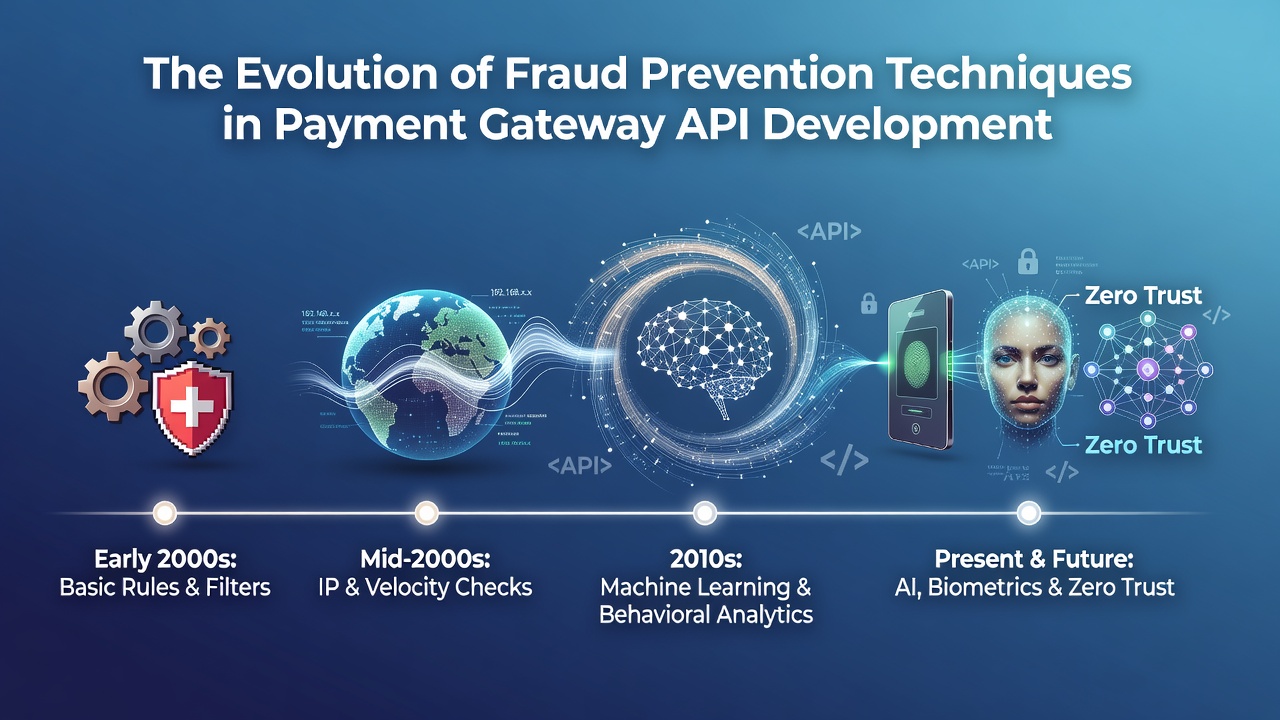
Early payment systems relied on simple verification steps such as address matching and card verification values, yet these measures quickly proved insufficient as transaction volumes grew and digital channels expanded. Developers began embedding basic rules into gateway APIs during the late 1990s and early 2000s, focusing on static filters that blocked obvious mismatches while allowing legitimate traffic to proceed without excessive delays. Those initial approaches centered on manual review queues and rudimentary velocity checks that tracked transaction counts within short windows. Researchers at institutions like the Massachusetts Institute of Technology documented how these techniques reduced certain chargeback categories, although sophisticated fraud rings soon adapted by distributing attempts across multiple accounts and devices. Payment gateway APIs started incorporating real-time data exchanges with issuing banks, which allowed authorization decisions to draw on broader risk signals including device fingerprints and geolocation data. This shift marked a move from post-transaction analysis to pre-authorization screening, cutting response times while maintaining security layers.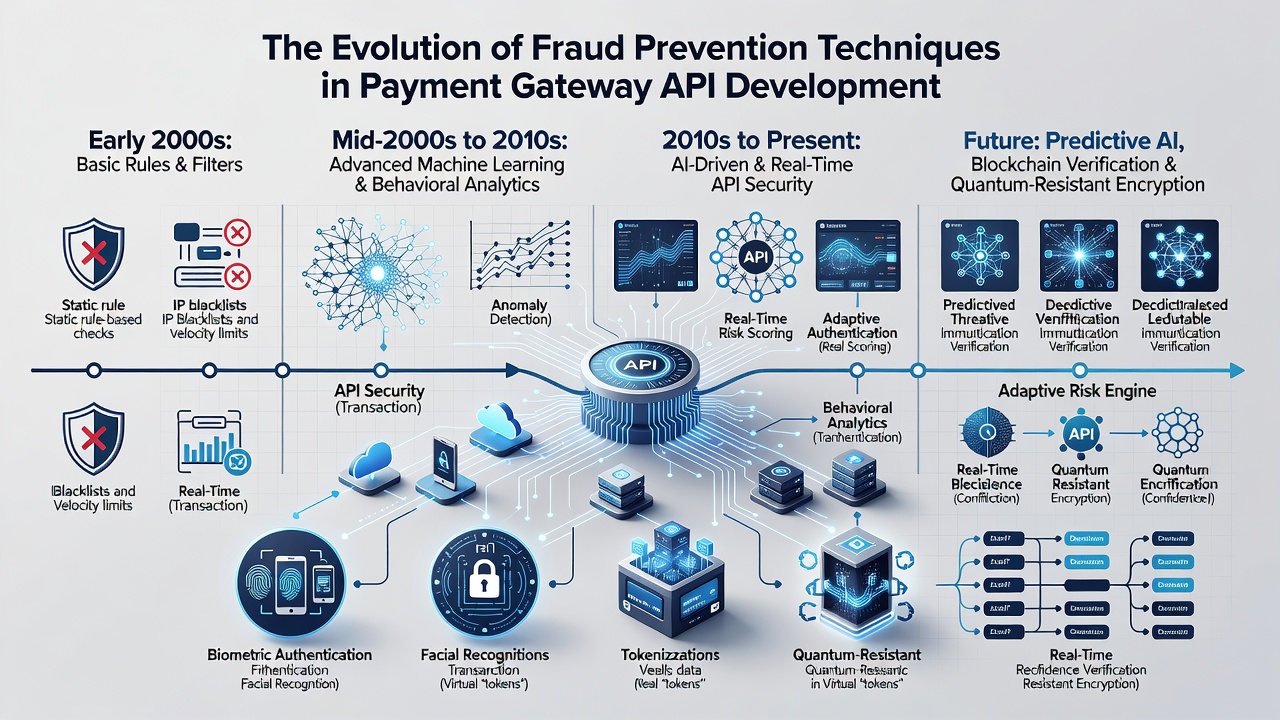 Behavioral biometrics entered API specifications shortly afterward, capturing subtle interaction signals such as typing cadence, swipe patterns on mobile interfaces, and accelerometer readings during checkout. These continuous authentication layers operated transparently within the same API call sequence, adding depth without requiring separate user actions.
Early payment systems relied on simple verification steps such as address matching and card verification values, yet these measures quickly proved insufficient as transaction volumes grew and digital channels expanded. Developers began embedding basic rules into gateway APIs during the late 1990s and early 2000s, focusing on static filters that blocked obvious mismatches while allowing legitimate traffic to proceed without excessive delays. Those initial approaches centered on manual review queues and rudimentary velocity checks that tracked transaction counts within short windows. Researchers at institutions like the Massachusetts Institute of Technology documented how these techniques reduced certain chargeback categories, although sophisticated fraud rings soon adapted by distributing attempts across multiple accounts and devices. Payment gateway APIs started incorporating real-time data exchanges with issuing banks, which allowed authorization decisions to draw on broader risk signals including device fingerprints and geolocation data. This shift marked a move from post-transaction analysis to pre-authorization screening, cutting response times while maintaining security layers.Introduction of Machine Learning Models
By the mid-2010s, teams integrated supervised learning algorithms directly into API workflows, training models on historical transaction datasets to score risk probabilities during each request. These systems analyzed patterns such as unusual purchase amounts, rapid sequence of payments, and mismatched user behavior profiles, then flagged high-risk items for additional authentication steps like one-time passcodes. Data from the Federal Reserve Bank of New York shows measurable declines in unauthorized transactions after widespread adoption of these models across major processors. Engineers refined feature sets continuously, adding variables like browser integrity checks and network reputation scores to improve accuracy without inflating false positives that frustrate customers.Tokenization and Secure Data Handling
Tokenization emerged as a core API capability around the same period, replacing sensitive card details with unique identifiers that held no intrinsic value if intercepted. Developers implemented these replacements at the gateway level, ensuring that merchant servers never stored primary account numbers while still enabling recurring or stored credential flows. Standards bodies including the European Central Bank emphasized token service integration in updated directives, prompting API providers to expose standardized endpoints for token generation, lifecycle management, and detokenization during settlement. This architecture limited exposure points and supported compliance across multiple jurisdictions.
Behavioral biometrics entered API specifications shortly afterward, capturing subtle interaction signals such as typing cadence, swipe patterns on mobile interfaces, and accelerometer readings during checkout. These continuous authentication layers operated transparently within the same API call sequence, adding depth without requiring separate user actions.