Technical Safeguards Governing Recurring Payments on Portable Merchant Devices
Rafael Otto · Aug 15, 2026
Technical Safeguards Governing Recurring Payments on Portable Merchant Devices
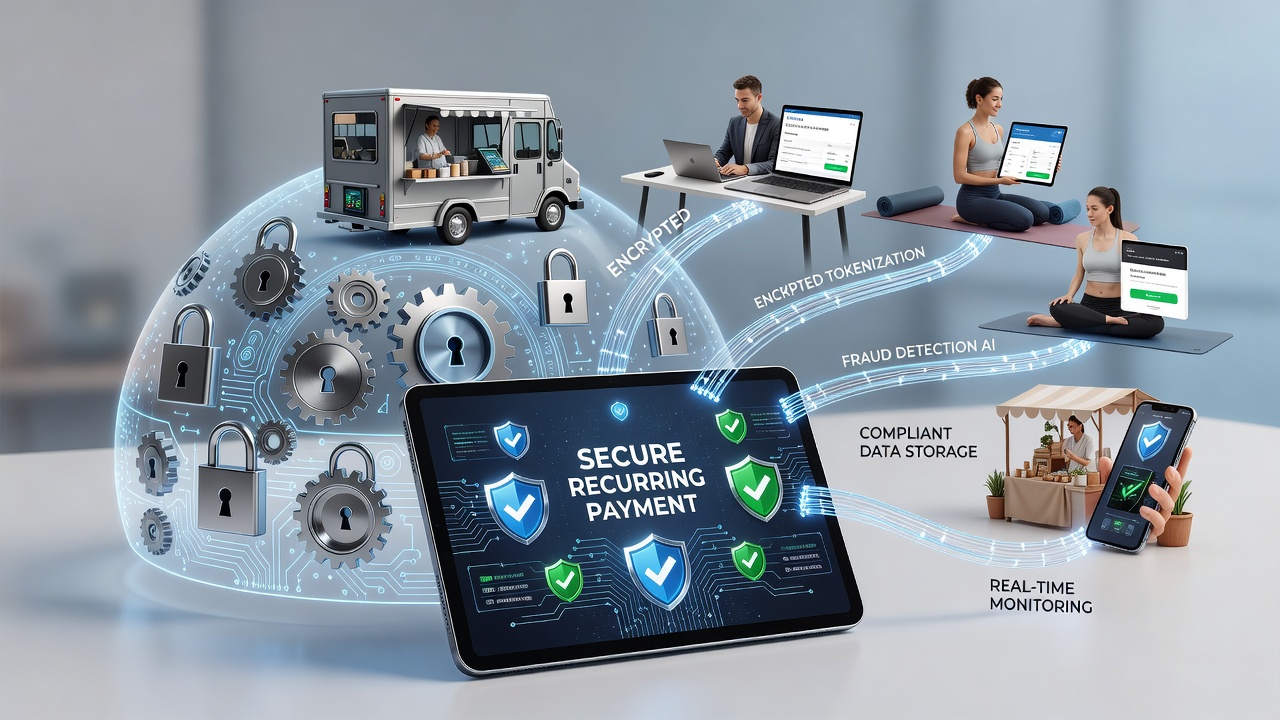
Small-scale mobile merchants rely on recurring billing systems that process repeated charges through portable terminals, and these operations require layered security measures to protect cardholder data during each transaction cycle. Systems handle authorization requests that travel from the device to payment processors while maintaining compliance with established standards, and the process begins with tokenization that replaces sensitive account numbers with unique identifiers stored in secure vaults rather than on the mobile hardware itself.
Token Replacement and Data Isolation Techniques
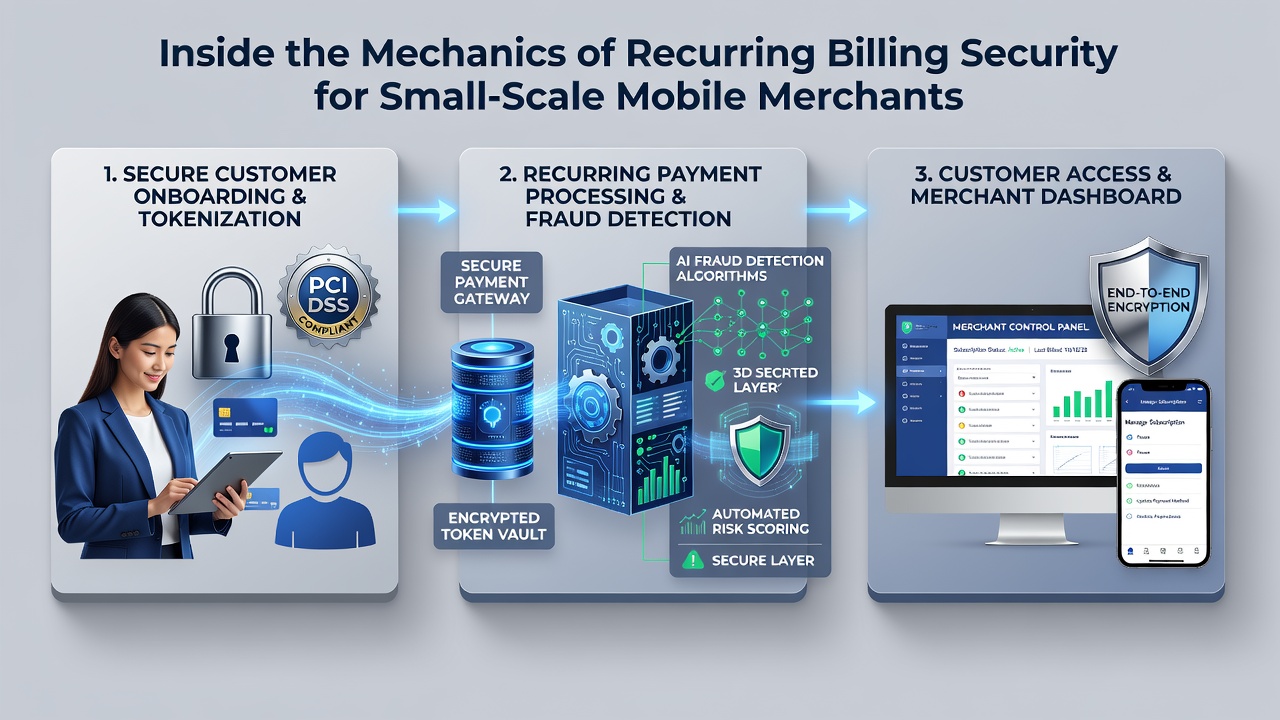
Tokenization operates by generating a random string that maps back to the original card details only within a controlled environment, which reduces exposure when devices sync with subscription platforms in the field. Merchants connect portable readers to apps that initiate these replacements at the point of capture, and this approach limits the amount of account information retained on equipment that moves between locations daily. Data isolation extends further through segmented networks where billing schedules trigger separate authorization calls, and each call uses the token without ever transmitting the full primary account number over public connections.
Researchers at institutions studying payment infrastructures have documented how these replacements cut down on stored data risks, while regulatory updates through August 2026 emphasize stricter vault access controls for smaller operators who manage high volumes of repeat transactions. The mechanics involve application programming interfaces that request tokens during initial enrollment, after which subsequent charges reference only the alias, and this flow supports continuity even when devices experience temporary connectivity loss.
Encryption Pathways and Key Management Practices
Encryption secures data both at rest on the device and in transit during recurring authorization attempts, with protocols such as AES-256 applied to stored billing profiles and TLS 1.3 protecting the movement of requests to gateways. Mobile merchants configure their systems so that encryption keys rotate on scheduled intervals managed through centralized services, which prevents long-term exposure if a device encounters physical compromise. Key rotation follows protocols outlined by industry bodies, and small operators often integrate these rotations into their onboarding workflows to align with evolving benchmarks.
According to guidelines from the PCI Security Standards Council, encryption must cover all elements of cardholder information involved in subscription processing, while the European Central Bank has reported on similar requirements under revised payment directives that stress end-to-end protection for mobile channels. Observers note that these practices become especially relevant when merchants operate across multiple regions, as differing standards still converge on the need for strong cryptographic controls that adapt to device mobility.
Authorization Flows and Access Controls
Authorization for recurring deductions follows a sequence where the mobile terminal submits a token-based request that includes amount, schedule identifier, and merchant credentials, after which the processor validates the token against stored permissions before approving the charge. Access controls limit which personnel or automated scripts can initiate these flows, often through role-based permissions tied to device authentication that requires multi-factor verification on each login. Small merchants configure these controls so that billing cycles proceed without manual intervention while still logging every step for audit purposes.
Studies from academic sources on financial technology have examined how such sequenced authorizations reduce unauthorized attempts, and the patterns show consistent use of time-bound tokens that expire after a set number of uses or a defined period. This design supports the operational needs of vendors who process recurring revenue streams through equipment that remains in constant motion between customer sites.
Fraud Detection Integration with Billing Cycles
Fraud detection layers analyze transaction patterns in real time as recurring requests reach the processor, flagging anomalies such as unusual amounts or mismatched device locations before funds move. These systems combine velocity checks with behavioral signals from the mobile terminal, including GPS coordinates and connection types, to score each scheduled charge. Integration occurs through application programming interfaces that feed billing data into detection engines without interrupting the merchant's workflow.
Figures from industry reports indicate rising adoption of these combined tools among smaller operators, and the mechanics allow alerts to reach merchants via their portable apps so adjustments can occur before the next cycle begins. The result maintains continuity for legitimate subscriptions while isolating suspicious activity at the authorization stage.
Conclusion
Security in recurring billing for small-scale mobile merchants centers on tokenization, encryption, controlled authorizations, and integrated detection that together form a framework adaptable to portable operations. These elements operate in sequence to protect data across repeated cycles, and ongoing refinements in standards continue to shape how independent vendors implement them in practice. Data shows consistent emphasis on minimizing stored information and securing transmission paths as core requirements that support both compliance and operational reliability.