Nonprofit Groups Confront Distinct Obstacles Adding Recurring Donation Tools to Mobile Card Readers Under Strict Regulatory Standards
Rafael Otto · May 30, 2026

Nonprofit Groups Confront Distinct Obstacles Adding Recurring Donation Tools to Mobile Card Readers Under Strict Regulatory Standards
Charities across multiple regions continue expanding their reach through portable card processing devices that now incorporate automated billing functions for recurring gifts, yet these organizations encounter specialized barriers tied to limited resources, volunteer-driven operations, and layered compliance demands, and data from industry reports shows that adoption rates for such integrated systems grew steadily between 2023 and 2025 while regulatory scrutiny intensified in parallel.
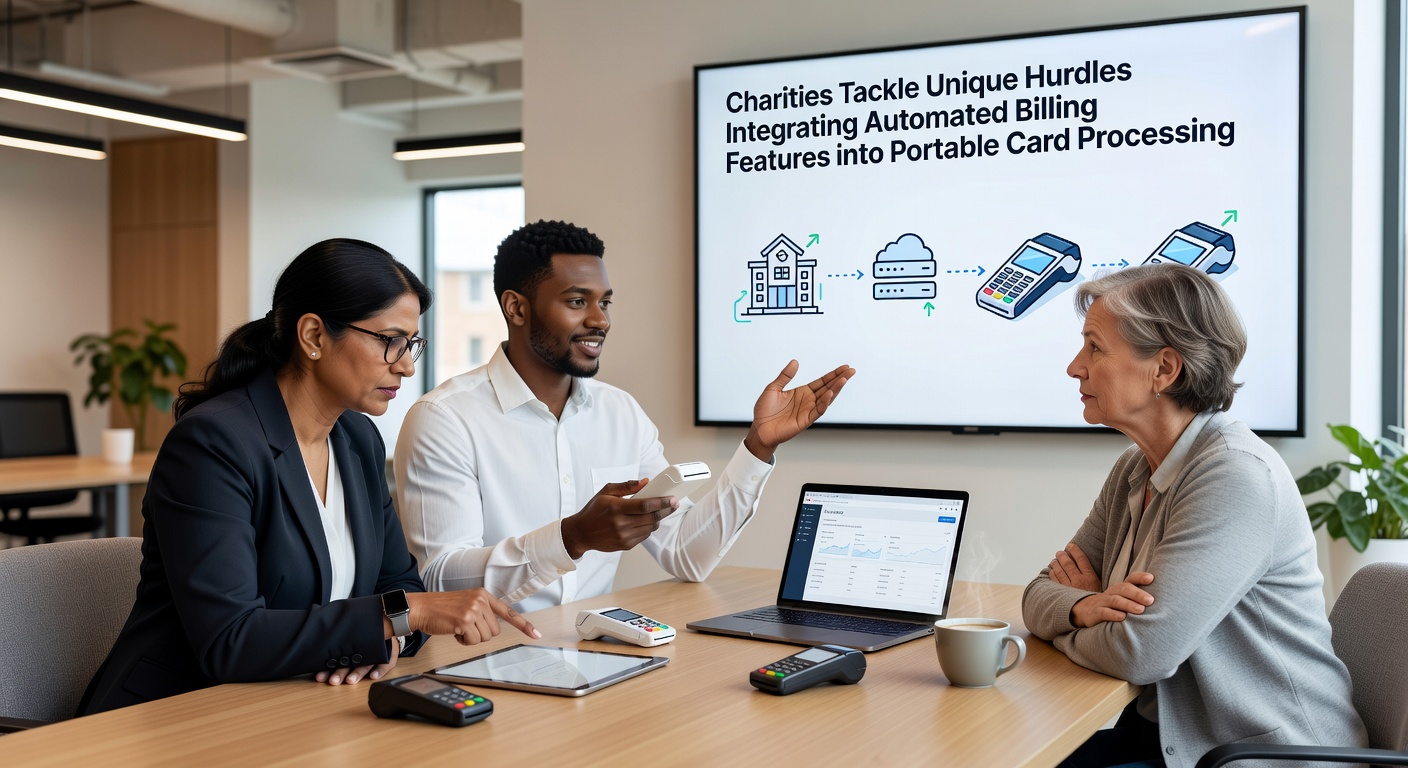
Portable equipment allows field teams to accept donations at events, door-to-door campaigns, and pop-up sites, and when automated billing layers connect to these devices the process enables supporters to schedule ongoing contributions without repeated manual entries, though charities must simultaneously satisfy payment card industry data security standards along with regional privacy rules that differ by jurisdiction.
Resource Constraints Shape Implementation Paths
Budget limitations force many nonprofits to select cost-effective hardware and software combinations that still meet technical specifications for tokenization and encryption during each transaction cycle, and researchers at academic institutions have documented cases where smaller organizations delayed rollout by several months because initial vendor quotes exceeded available technology funds.
Staff training becomes another focal point since volunteers often rotate through positions and require clear protocols for handling donor information on mobile terminals without creating exposure points, while larger charities with dedicated IT teams report smoother transitions when they establish centralized oversight for recurring payment schedules.
Regulatory Layers Add Complexity Across Borders
PCI DSS requirements mandate that cardholder data never resides on portable devices longer than necessary, and automated billing integrations must route recurring authorization requests through secure gateways that tokenize sensitive details before storage occurs elsewhere, and compliance documentation shows that organizations operating in both North American and European markets must reconcile differing expectations around data retention periods.
According to guidance issued by the European Banking Authority, payment service providers serving charitable entities must verify that recurring transaction setups include explicit donor consent mechanisms that remain auditable over time, whereas the Consumer Financial Protection Bureau in the United States emphasizes clear disclosure of cancellation procedures for ongoing deductions, and these overlapping rules create additional review steps during system configuration.
Observers note that updates scheduled for May 2026 will introduce revised testing procedures for wireless transmission security on portable readers, and charities preparing now are conducting internal audits to confirm that their chosen equipment vendors can deliver firmware patches without service interruptions during peak fundraising seasons.
Practical Examples Illustrate Varied Approaches
One regional food bank in Canada integrated automated billing into handheld terminals used during harvest festival collections, and the resulting system routes each scheduled gift through an API that logs consent timestamps while keeping primary card details off the mobile units entirely, and internal records indicate a 28 percent increase in sustained donor participation after the first year of operation.
Another organization focused on environmental causes in Australia adopted a hybrid model where portable readers capture initial gifts at public rallies and then transfer scheduling details to a cloud platform that handles subsequent charges, and figures released by the Australian Charities and Not-for-profits Commission highlight how such configurations helped maintain compliance during a period of heightened data-breach reporting requirements.
Security Protocols and Donor Trust Intersect
Tokenization combined with end-to-end encryption forms the baseline for any recurring feature on portable hardware, and experts emphasize that charities must verify their selected payment processors maintain current certifications under evolving PCI standards to avoid lapses that could erode public confidence in donation handling practices.
Privacy regulations further require that donors receive straightforward options to pause or terminate recurring arrangements, and organizations that embed these controls directly into the mobile interface reduce follow-up administrative workload while satisfying audit trails demanded by oversight bodies.
Conclusion
Charities continue refining their strategies for embedding automated billing within portable card systems, and the combination of technical safeguards, staff education, and jurisdiction-specific compliance measures determines how effectively these groups can sustain recurring revenue streams without compromising regulatory standing or donor relationships, and ongoing developments through 2026 will likely prompt additional refinements as equipment capabilities and oversight expectations evolve together.