Managing Encryption Key Rotation in Mobile Donation Terminals for Recurring Local Support Programs
Morgan Brooks · Jun 13, 2026
Managing Encryption Key Rotation in Mobile Donation Terminals for Recurring Local Support Programs
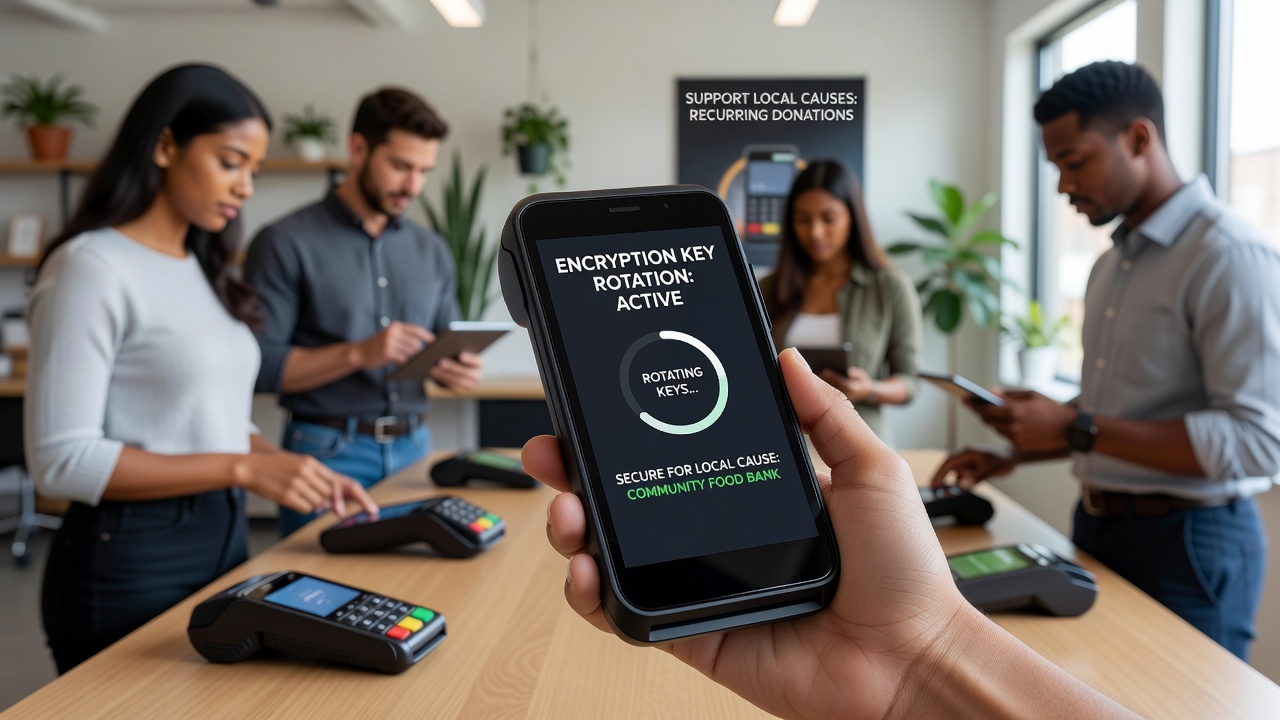
Organizations running recurring support programs for local causes rely on mobile donation terminals to process ongoing contributions from donors, and encryption key rotation forms a core component of maintaining data security throughout these operations. Mobile terminals capture card details at events, street collections, and pop-up locations, while recurring setups schedule repeated charges that require persistent protection of stored credentials and transaction data. Key rotation replaces cryptographic keys at defined intervals to limit exposure windows, and payment networks enforce these cycles through standards that apply directly to portable devices handling sensitive cardholder information.
Core Elements of Key Rotation in Mobile Environments
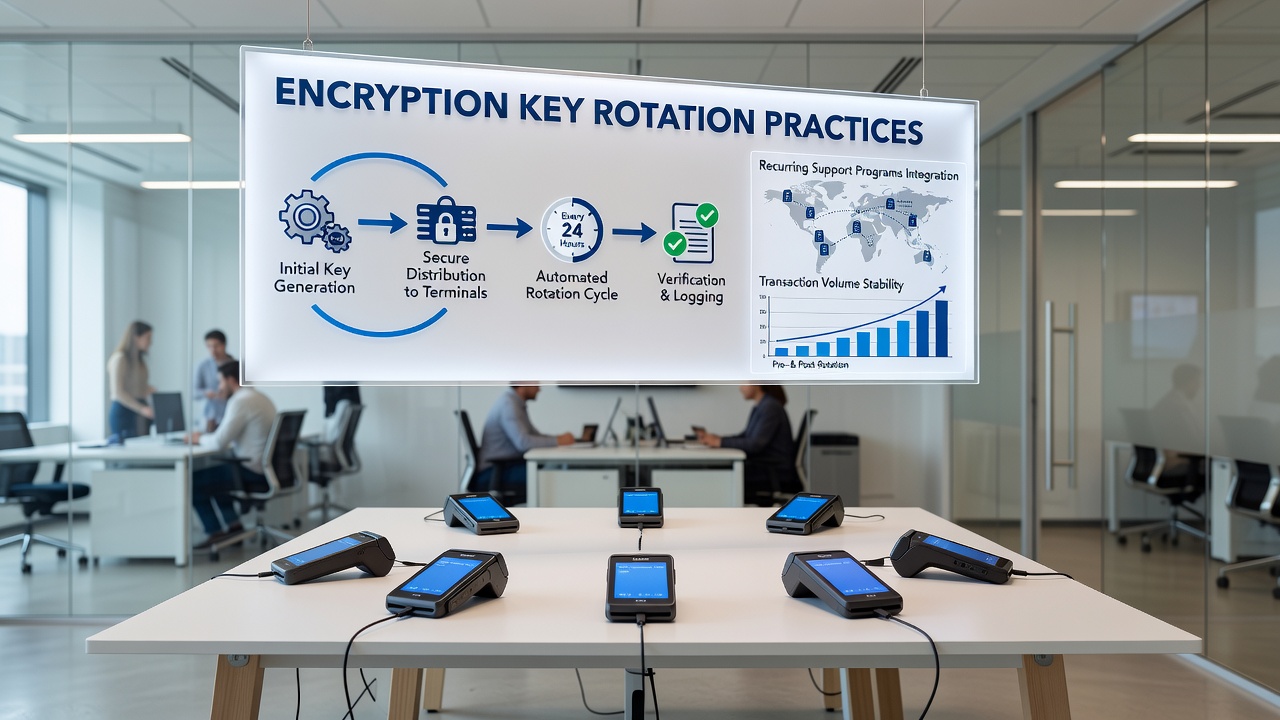
Encryption keys protect data during transmission and storage on mobile terminals, yet prolonged use of the same key increases risk if a device is compromised. Rotation schedules typically follow intervals outlined in PCI DSS requirements, where symmetric keys used for card data encryption must change at least annually or upon any suspected breach. In recurring donation programs, terminals often retain tokenized references to donor accounts, which means key updates must occur without disrupting scheduled charges or requiring donors to re-enter details. Systems achieve this through automated processes that generate new keys, re-encrypt existing data, and distribute fresh keys to authorized endpoints while maintaining audit logs of each transition.
Hardware security modules embedded in many mobile terminals facilitate secure key generation and storage, and operators schedule rotations during low-activity periods to minimize service interruption. Software updates pushed over cellular or Wi-Fi connections deliver new keys alongside firmware patches, and remote management platforms allow administrators to verify successful rotation across fleets of devices used by volunteers at different sites.
Compliance Requirements and Operational Challenges
Regulatory frameworks such as those maintained by the PCI Security Standards Council establish baseline procedures for key management in payment systems, including requirements for dual control during key changes and secure destruction of retired keys. PCI Security Standards Council documentation outlines specific controls that apply when terminals process recurring transactions, because stored credentials used for scheduled donations demand ongoing encryption under the same key lifecycle rules. Mobile environments introduce additional variables such as intermittent connectivity and device loss, which complicate verification that every terminal has completed rotation before the deadline.
One community organization coordinating monthly donations for neighborhood food banks encountered synchronization issues when volunteer-operated terminals in rural areas missed over-the-air updates, leading to manual key loading procedures at central locations. Such cases illustrate how rotation practices must account for device mobility and varying network conditions while still satisfying audit trails demanded by acquiring banks.
Technical Approaches and Scheduling Practices
Automated key rotation systems use centralized key management servers that push updated keys through secure channels, often leveraging asymmetric cryptography to wrap new symmetric keys during distribution. Terminals decrypt the wrapped keys only after authenticating the source server, and successful installation triggers confirmation messages that update compliance dashboards. Scheduling tools integrate with donation management platforms so that key changes align with billing cycles, preventing any overlap that could cause authorization failures for recurring charges.
Research from the National Institute of Standards and Technology provides guidance on recommended key lengths and rotation frequencies that payment processors adapt for mobile deployments. NIST Special Publication 800-57 emphasizes lifecycle management that includes secure key backup, access restriction, and timely replacement, principles directly relevant when terminals operate across multiple recurring support campaigns simultaneously. Observers note that organizations running programs for local causes often combine these federal guidelines with regional data protection rules to create unified rotation policies.
Impact on Recurring Donation Workflows
Key rotation events require careful coordination because any mismatch between old and new keys can block authorization requests for scheduled donations. Payment gateways handling recurring billing typically support key versioning, allowing terminals to reference the correct key for each transaction even during transition periods. Field teams receive advance notification of upcoming rotations, and testing environments replicate production terminals to validate that recurring charge processing continues uninterrupted after the switch.
Data collected from terminal logs shows that organizations completing rotation within prescribed windows experience fewer compliance exceptions during annual audits. June 2026 marks the scheduled release of updated PCI DSS version 5.0 guidance that further refines key rotation timelines for contactless and mobile acceptance channels, prompting many local cause programs to review their current schedules ahead of the change.
Conclusion
Encryption key rotation practices in mobile donation terminals support the secure operation of recurring support programs by limiting the duration any single key protects sensitive donor data. Established standards, combined with automated distribution methods and careful scheduling around billing cycles, enable organizations to maintain compliance while serving community causes across varied operational settings. Continued alignment with evolving guidelines ensures these practices remain effective as mobile technologies advance.