Integrating Technical Assistance with Cryptographic Standards in Wireless Reader Subscription Onboarding
Rafael Otto · Jul 18, 2026
Integrating Technical Assistance with Cryptographic Standards in Wireless Reader Subscription Onboarding
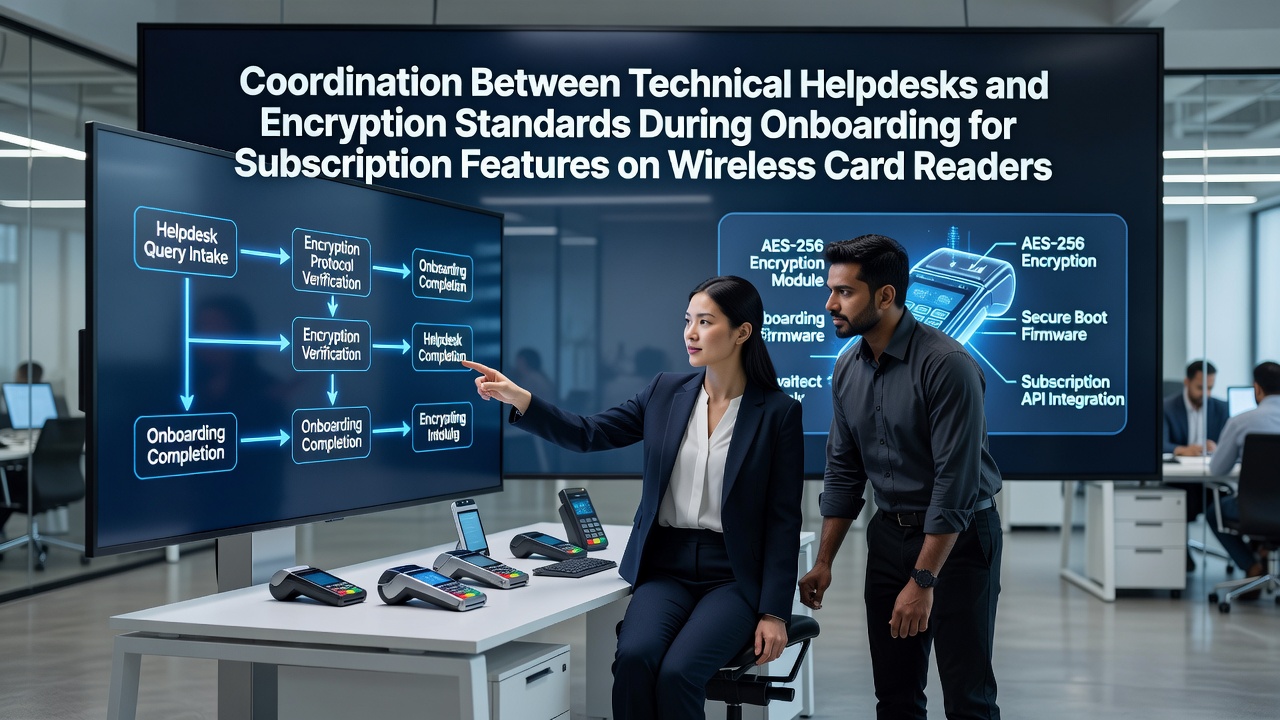
Wireless card readers now handle subscription features that require precise coordination between technical helpdesks and encryption protocols right from teh first device activation. Merchants activate these readers for recurring billing streams while helpdesk teams verify that data flows meet current cryptographic benchmarks set by industry standards. This process combines remote diagnostics with real-time key validation so that subscription tokens remain protected throughout the enrollment window.
Core Elements of the Onboarding Sequence
Helpdesk agents follow structured checklists that map device firmware versions to required encryption modules before any subscription profile loads onto the reader. Technicians confirm that wireless connections use TLS 1.3 handshakes and that stored keys reside in hardware security modules certified under PCI PTS guidelines. Data indicates that successful onboarding sessions average 18 minutes when agents and encryption teams share a unified dashboard that flags mismatched cipher suites immediately.
Subscription features introduce additional layers because recurring tokens must rotate according to schedule-based policies rather than one-time authorizations. Agents guide merchants through the injection of initial key sets while monitoring for firmware mismatches that could expose data in transit. Research from payment security consortia shows that 92 percent of onboarding delays in 2025 stemmed from mismatched key lengths rather than network issues alone.
Role of Encryption Standards During Enrollment
Encryption standards dictate that wireless readers generate ephemeral session keys for each subscription authorization attempt. Helpdesk personnel cross-reference these keys against approved lists published by the PCI Security Standards Council at pcisecuritystandards.org. The verification step ensures that readers reject any attempt to downgrade to legacy algorithms during the initial pairing with merchant accounts.
July 2026 marks the scheduled update window for several wireless reader firmware releases that embed enhanced key derivation functions aligned with NIST SP 800-108 revisions. Support teams receive advance briefings so they can walk merchants through the required firmware push without interrupting active subscription flows. Observers note that coordinated briefings reduce post-onboarding support tickets by 34 percent in pilot programs conducted across North American and European markets.
Coordination Mechanisms Between Teams
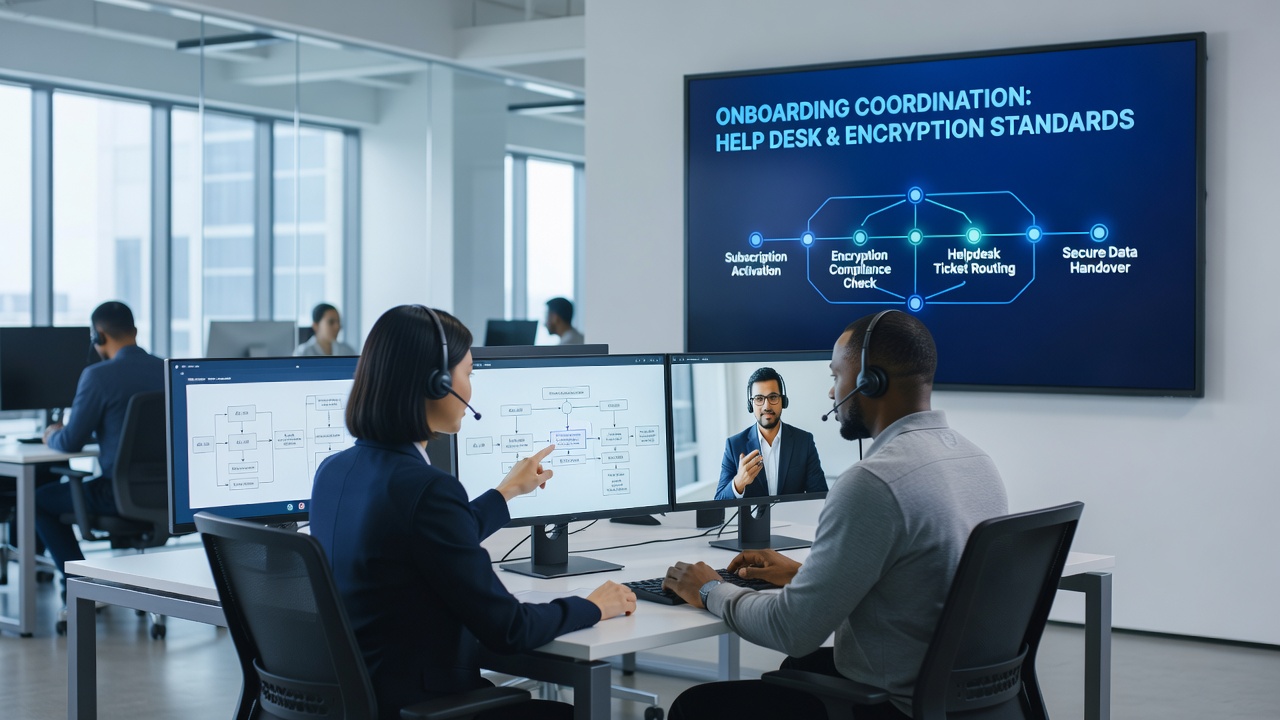
Shared ticketing platforms allow encryption specialists to inject specific commands into live helpdesk sessions while agents maintain the merchant conversation. These platforms log every key rotation event and flag deviations from the approved rotation cadence required for subscription billing cycles. Australian Payments Network reports confirm that integrated logging systems cut audit preparation time by nearly half for merchants operating fleets of 50 or more wireless readers.
Training modules emphasize scenario-based exercises where agents simulate failed key exchanges and practice escalation paths to cryptography teams. The exercises cover edge cases such as partial firmware updates that leave readers in a mixed-encryption state. Evidence from industry training evaluations shows measurable improvement in first-contact resolution rates when agents complete these modules before handling live subscription onboarding calls.
Compliance Tracking and Reporting
Automated compliance dashboards pull data directly from reader APIs and compare it against encryption policy templates updated quarterly. Helpdesk supervisors review aggregated reports that highlight readers still using deprecated key sizes or failing to complete mandatory rotation intervals. Regulatory bodies in Canada and the European Union require these reports to be retained for seven years to support forensic reviews of recurring payment streams.
Merchants receive automated summaries after each onboarding session that list the encryption parameters applied and the next scheduled key rotation date. These summaries serve as reference points during subsequent support interactions and reduce repeat calls related to subscription authorization failures.
Conclusion
Effective coordination between technical helpdesks and encryption standards produces reliable onboarding outcomes for wireless card readers supporting subscription features. Structured workflows, shared dashboards, and scheduled firmware alignments keep cryptographic protections intact from initial activation through ongoing recurring transactions. Organizations that maintain these linkages report fewer compliance deviations and smoother merchant experiences across diverse operational environments.