Encryption Synchronization Challenges in Merchant API Transitions to Mobile Subscription Billing Systems
Yves Brooks · Jul 28, 2026
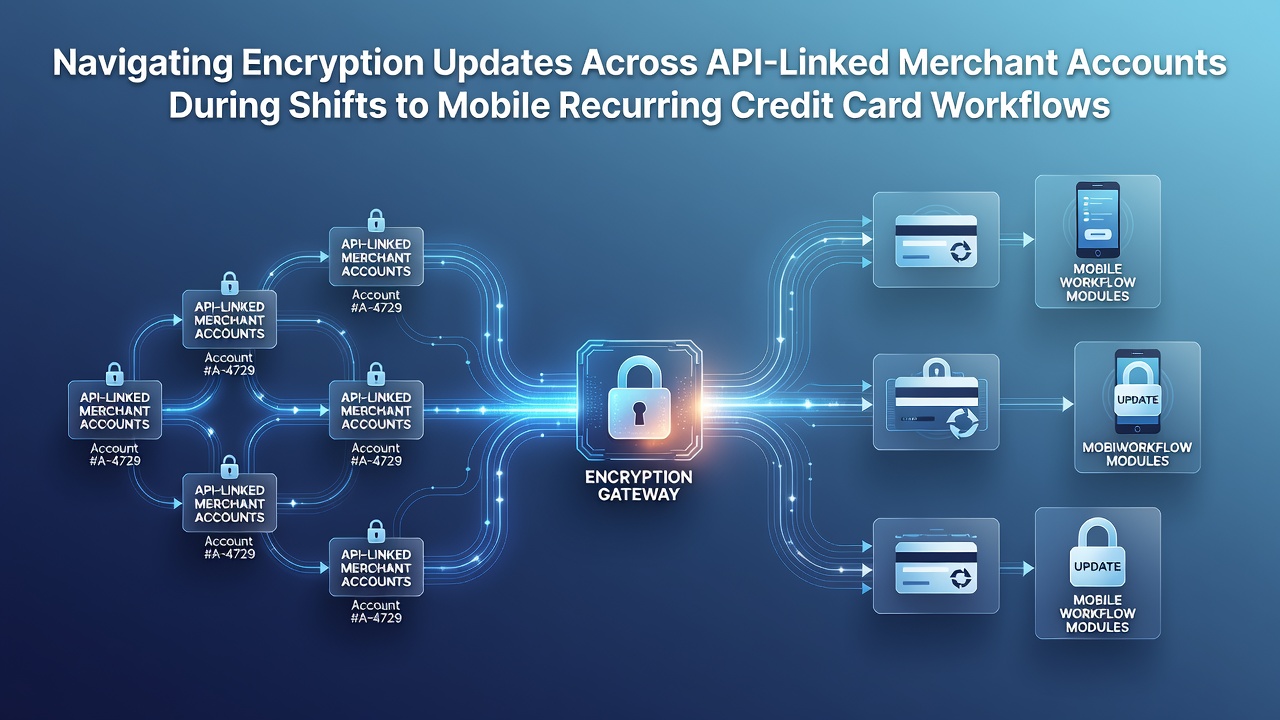
Encryption Synchronization Challenges in Merchant API Transitions to Mobile Subscription Billing Systems
Encryption protocols continue to evolve as merchant accounts integrate API connections with mobile recurring credit card workflows, and organizations must align key management practices with updated standards that emerge from regulatory bodies. Data from industry reports shows that payment processors began enforcing stricter rotation schedules for encryption keys in early 2025, which created ripple effects for accounts handling subscription billing on portable devices.
Core Elements of Encryption Updates in API Environments
API-linked merchant accounts process recurring transactions through encrypted channels that require periodic key rotations, and shifts to mobile workflows introduce additional variables such as device-level storage and transmission protocols. Observers note that when accounts migrate from static desktop gateways to mobile platforms, the encryption handshake sequences must accommodate variable network conditions while maintaining compliance with data protection rules. Research indicates that key lengths and cipher suites receive updates on cycles that align with broader security frameworks, forcing developers to test API endpoints repeatedly during transition periods.
Timing Considerations Around July 2026 Milestones
July 2026 marks a scheduled phase for several encryption standard revisions that affect recurring billing setups, and merchants who have not completed API adjustments by then face potential interruptions in authorization flows. Figures from payment network announcements reveal that new requirements for authenticated encryption with associated data will apply to mobile-initiated subscriptions, which means accounts must verify their cryptographic libraries support the updated modes before the deadline arrives. Those who studied prior rollout cycles know that early testing of key exchange mechanisms reduces downtime when the changes activate across connected systems.
Integration Points Between Mobile Devices and Recurring Workflows
Mobile recurring credit card workflows rely on APIs that transmit tokenized card data alongside encrypted payloads, while merchant accounts maintain backend records that must sync with each rotation event. Experts have observed that portable terminals introduce latency in key synchronization steps compared to fixed installations, and this latency can compound when multiple subscription cycles run simultaneously. Studies found that accounts using hybrid setups, combining cloud-based API management with on-device encryption modules, achieve smoother transitions because they isolate sensitive operations from network variability. What's interesting is how tokenization layers interact with these encryption updates, since tokens often reference keys that rotate independently of the mobile session itself.
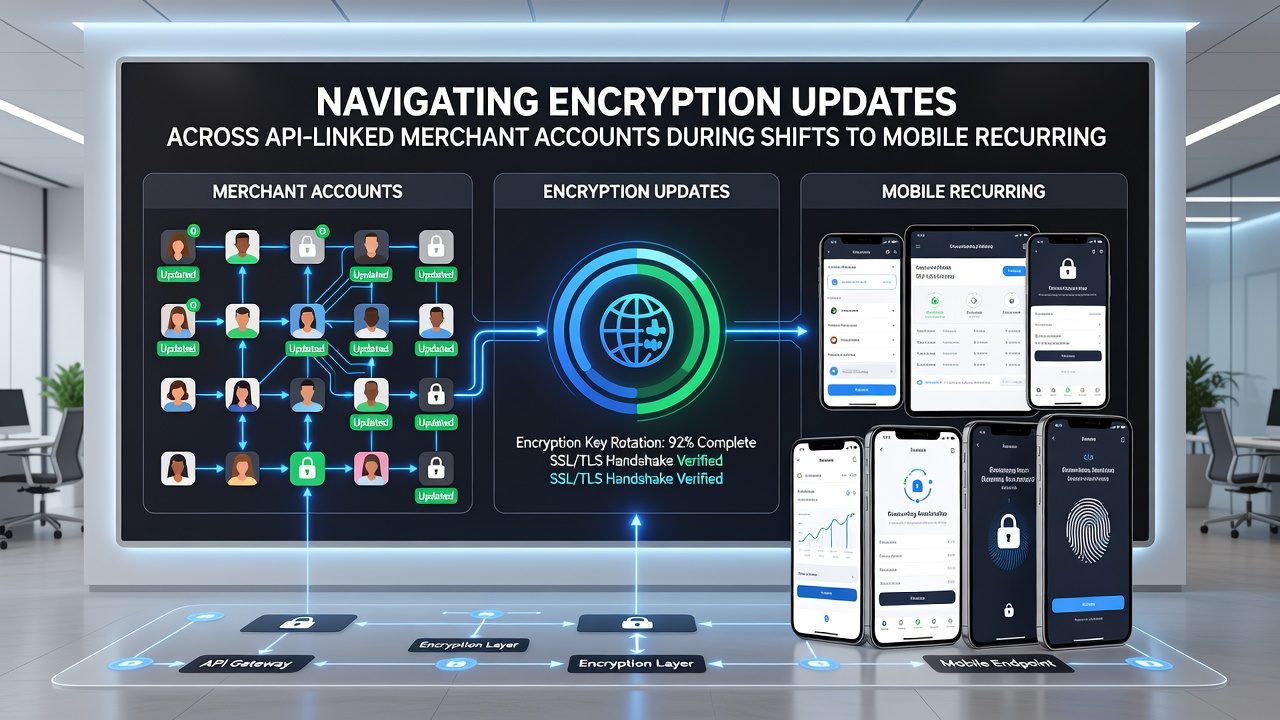
Take one case where a regional processor updated its mobile application framework in late 2025; the team discovered that recurring deduction routines required new certificate pinning configurations to prevent handshake failures after the encryption changes took effect. Data shows such configurations now appear in documentation from multiple gateway providers, reflecting a broader pattern across the sector.
Compliance Pathways and Key Management Practices
Regulatory frameworks require documented procedures for encryption key generation, distribution, and destruction within merchant account environments, and mobile recurring setups add layers because devices may operate offline for periods. According to guidance issued by the PCI Security Standards Council, accounts must implement dual-control mechanisms for key custodians even when transactions originate from field-based terminals. Those who've examined European Central Bank reports on payment security note that similar controls appear in cross-border recurring billing scenarios, which encourages standardized audit trails regardless of device location. But here's the thing: synchronization between API endpoints and mobile hardware demands automated logging that captures each key version in use during authorization requests.
Practical Adjustments for Account Operators
Account operators often schedule phased rollouts that begin with non-production environments before touching live recurring streams, and this approach allows verification of encryption compatibility across API versions. Research indicates that accounts maintaining separate staging instances for mobile testing encounter fewer production incidents during update windows. Observers note that vendor support channels frequently supply migration scripts that handle key re-encryption for historical subscription data, yet operators must still validate that these scripts align with their specific API authentication methods. And when network conditions fluctuate, fallback procedures that preserve encrypted session integrity become essential for uninterrupted billing cycles.
Monitoring and Validation After Implementation
Post-update monitoring tracks authorization success rates alongside encryption-related error codes, and accounts that integrate these metrics into existing dashboards gain clearer visibility into workflow stability. Data from transaction processors shows that recurring mobile payments experience temporary spikes in declines when key rotations coincide with peak billing dates, which underscores the value of staggered update schedules. People who manage large merchant portfolios report that automated alerts triggered by cipher suite mismatches accelerate resolution times compared to manual review processes.
Conclusion
Encryption updates across API-linked merchant accounts during transitions to mobile recurring credit card workflows require coordinated adjustments in key handling, device configuration, and compliance documentation. July 2026 introduces additional deadlines that affect these alignments, while established practices around testing and monitoring continue to support operational continuity. Accounts that map their encryption pathways against regulatory timelines position themselves to maintain authorization flows without extended interruptions.