Encryption Key Rotation Cycles Across Interconnected Billing Platforms Serving Local Traders
Theo Powell · Aug 4, 2026
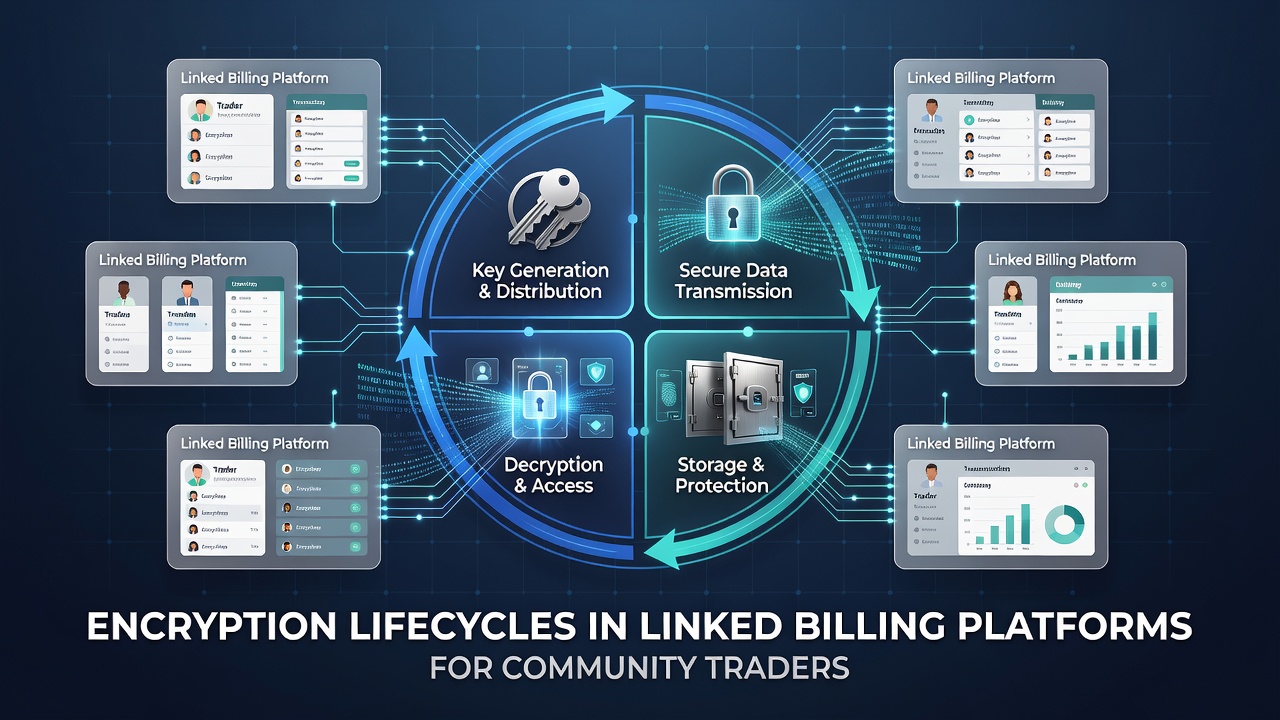
Encryption Key Rotation Cycles Across Interconnected Billing Platforms Serving Local Traders
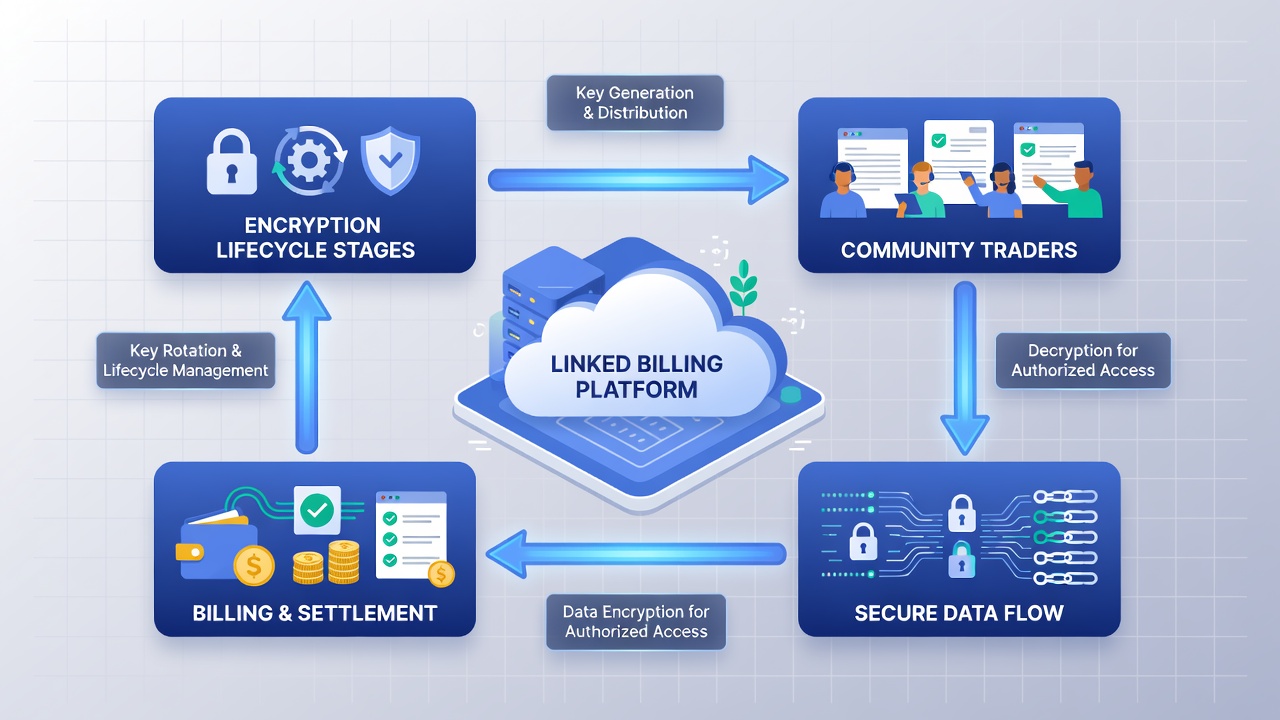
Encryption key lifecycles in linked billing platforms follow structured phases that include generation, distribution, active use, rotation, and eventual destruction, and community traders rely on these sequences to maintain secure recurring transactions across mobile and fixed systems. Data from regulatory frameworks shows that keys typically operate under defined validity periods, after which rotation becomes mandatory to limit exposure windows, while platforms serving local vendors integrate these processes into subscription and point-of-sale workflows. Researchers at institutions tracking payment security note that effective lifecycle management reduces risks associated with long-term key retention, and organizations such as the National Institute of Standards and Technology publish guidelines that many billing providers reference when configuring automated rotation intervals.
Generation and Initial Distribution Phases
Key generation occurs within hardware security modules or certified software environments that produce cryptographically strong random values, and distribution then routes these keys through encrypted channels to authorized endpoints in the billing network. Community traders often connect portable card readers to cloud-based recurring payment services, so platforms must synchronize key delivery across multiple devices without interrupting daily operations. Studies from academic sources indicate that initial distribution protocols incorporate mutual authentication steps, which verify both the sending server and receiving terminal before any key material transfers, and this approach aligns with standards used in regions including the European Union and Australia.
Active Use and Scheduled Rotation
During active use, keys encrypt transaction data and authorization messages that flow between community traders and linked billing processors, and rotation schedules trigger replacement before expiration dates arrive. Observers note that many platforms set rotation windows between 90 and 180 days for symmetric keys handling recurring charges, while asymmetric key pairs may follow longer cycles tied to certificate validity. In August 2026, several providers updated their systems to support shorter rotation periods for mobile terminals, reflecting updated recommendations from international standards bodies that emphasize reduced key lifetime to counter advancing computational threats. Those managing billing integrations for local markets find that automated scripts handle most rotation events, although manual oversight remains necessary when devices operate in areas with intermittent connectivity.
Revocation, Expiration, and Secure Destruction
Revocation lists allow platforms to invalidate compromised keys immediately, and expiration mechanisms automatically disable keys once their lifecycle ends, which prevents continued use in authorization requests. Secure destruction follows documented procedures that overwrite key material in storage locations, and compliance records from Canadian regulatory sources require audit trails documenting each destruction event. Community traders benefit from these controls because linked billing platforms can isolate individual vendor accounts during a revocation event without affecting the broader network, and this segmentation proves useful when devices are lost or when subscription services detect anomalous activity patterns.
Integration Challenges for Community Trading Networks
Small-scale operators encounter specific hurdles when encryption lifecycle processes intersect with legacy point-of-sale hardware and subscription management tools, and platform providers address these issues through staged updates that maintain backward compatibility during key transitions. Evidence from industry reports reveals that synchronization delays can occur when mobile terminals reconnect after offline periods, requiring platforms to queue rotation commands until stable connections resume. Those who study payment ecosystems in diverse geographic markets report that traders in rural settings often depend on vendor support networks to verify successful key updates, and this reliance highlights the need for clear status indicators within billing dashboards.
Compliance Considerations Across Regions
Regulatory requirements in multiple jurisdictions mandate documentation of key lifecycle events, and billing platforms serving community traders incorporate logging functions that capture generation timestamps, rotation confirmations, and destruction records. According to guidance from the Australian Signals Directorate, organizations must retain these logs for defined periods to support audits, while similar provisions appear in frameworks issued by the European Union Agency for Cybersecurity. Platforms that link billing services across borders implement region-specific configurations to satisfy varying retention rules, and this adaptability allows traders to expand operations without reconfiguring core encryption processes.
Conclusion
Encryption key lifecycles form a foundational element of secure operations in linked billing platforms that support community traders, and the coordinated management of generation, rotation, and destruction phases directly influences transaction integrity across recurring payment streams. Continued alignment with evolving standards from bodies such as the National Institute of Standards and Technology ensures that platforms maintain consistent security postures while accommodating the operational realities of mobile and subscription-based services for local vendors.