Decoding Authorization Workflows for Multi-Region Donation Platforms on Handheld Devices
Yves Brooks · Jun 25, 2026
Decoding Authorization Workflows for Multi-Region Donation Platforms on Handheld Devices
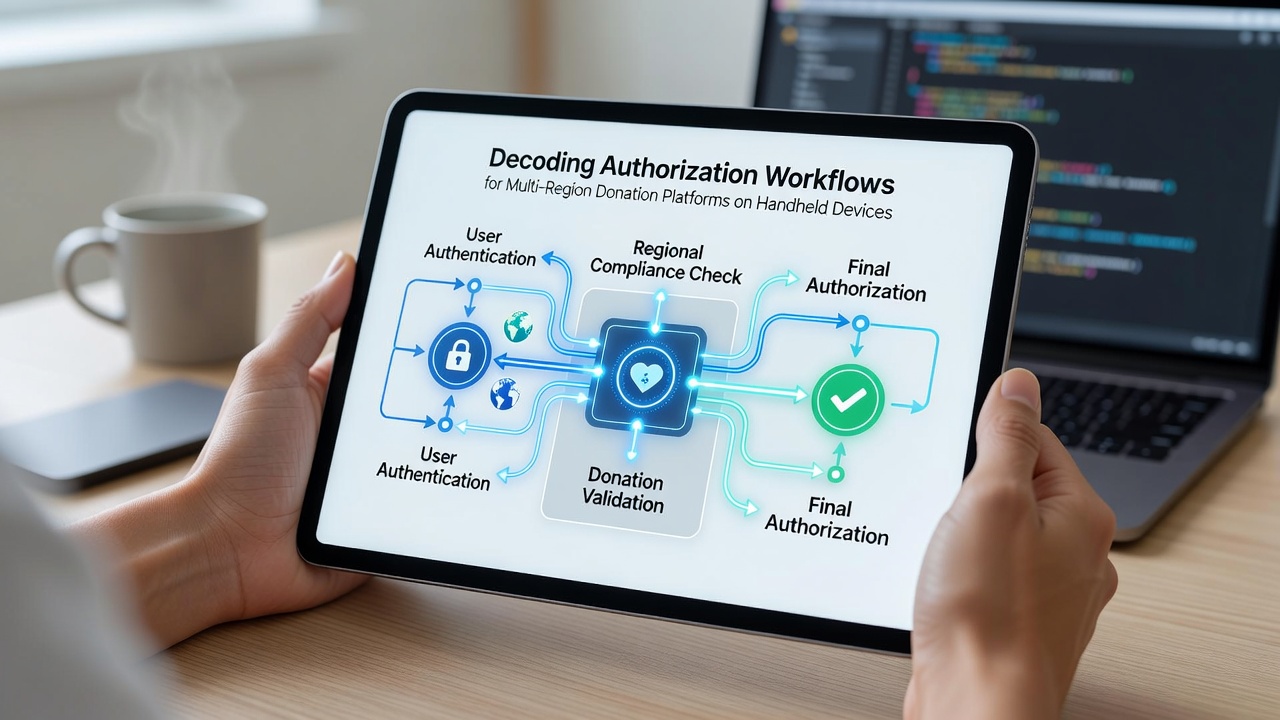
Authorization workflows in multi-region donation platforms operating on handheld devices involve layered sequences of verification steps that confirm donor identity, validate payment instruments, and ensure compliance across jurisdictions, and these processes adapt continuously as regulatory frameworks evolve in different countries. Handheld devices capture card data through near-field communication or integrated readers, then route requests to gateway servers that apply region-specific rules before forwarding to acquirers and issuers for final approval.
Regional Regulatory Influences on Workflow Design
European platforms must incorporate strong customer authentication requirements under the revised Payment Services Directive, which mandates multi-factor checks during recurring donation setups, while Canadian operators follow guidelines from the Office of the Superintendent of Financial Institutions that emphasize data residency for donor records processed on mobile terminals. Australian systems align with requirements set by the Australian Competition and Consumer Commission and the Australian Securities and Investments Commission, which together shape how authorization tokens are generated and stored during cross-border transfers initiated from handheld units.
These differing mandates create branching pathways in the workflow; a single donation request may trigger additional verification layers when the donor's location differs from the charity's registered base, and platform operators configure decision engines to detect such mismatches in real time.
Technical Steps in the Authorization Sequence
The sequence begins when a handheld device reads payment credentials and packages them with donation metadata, including amount, frequency, and intended recipient region; this packet travels encrypted over cellular or Wi-Fi connections to a central authorization server. Servers then apply tokenization to replace sensitive card details with unique identifiers that comply with PCI DSS standards, after which risk-scoring algorithms evaluate factors such as device location history, donation pattern anomalies, and velocity checks before the request advances.
Issuers receive the tokenized request and perform their own authorization logic, returning responses that indicate approval, decline, or referral for manual review, and platforms in multi-region environments often maintain separate routing tables that direct traffic to the appropriate issuer endpoint based on the card's country of issuance. In June 2026 several major card networks plan to expand support for dynamic authentication tokens that refresh per transaction on handheld devices, a change that will require platform operators to update their mobile software development kits accordingly.
Data Handling and Security Protocols Across Borders
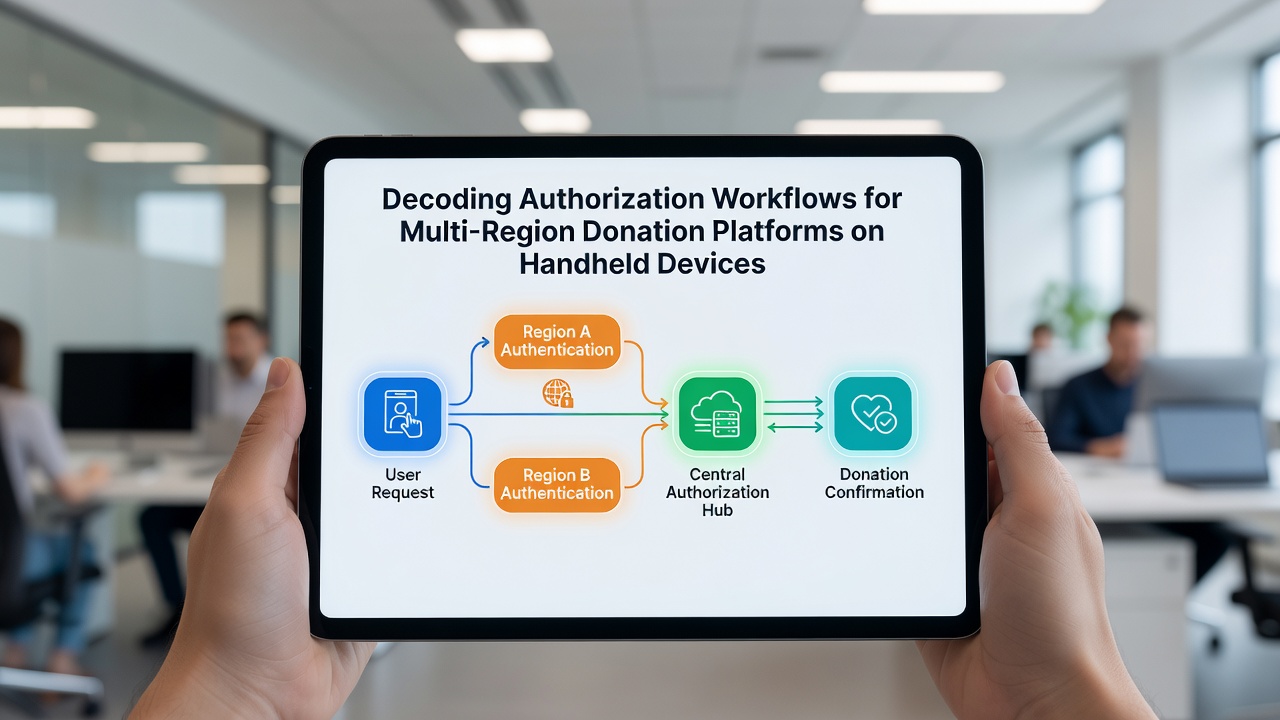
Encryption key management forms a critical segment of these workflows; devices generate session keys that rotate at intervals determined by the strictest regional standard applicable to the transaction, and platforms log each rotation event to satisfy audit requirements in both the European Union and North American markets. When a donation spans multiple regions the workflow inserts an intermediate compliance checkpoint that verifies whether the recipient organization holds proper registration in the donor's jurisdiction before funds move forward.
Observers note that organizations such as the PCI Security Standards Council publish updated implementation guides that help developers embed these checkpoints without introducing latency on resource-constrained handheld hardware.
Integration Challenges with Legacy Systems
Many established charities still rely on older backend donation management systems that were not originally designed for mobile-initiated recurring authorizations, and bridging these systems requires middleware layers that translate between modern token-based requests and legacy batch file formats. Middleware solutions must preserve audit trails that meet the evidentiary standards of multiple regulators, which often means duplicating certain log entries across separate regional databases.
Research from academic centers such as the Rotman School of Management at the University of Toronto has examined how these translation layers affect authorization success rates, revealing measurable drops when key rotation schedules fall out of synchronization between device firmware and server policies.
Conclusion
Authorization workflows for multi-region donation platforms on handheld devices continue to grow more intricate as new regulatory updates and technical standards emerge, yet the underlying sequence of credential capture, tokenization, risk evaluation, and issuer response remains consistent across implementations. Operators who maintain clear mappings between regional rules and workflow branches position their platforms to handle increasing volumes of cross-border recurring donations without introducing unnecessary friction for donors or compliance teams.