Coordinating Live Stock Records with Instant Payment Verifications Across Retail Platforms
Rafael Otto · Aug 25, 2026

Coordinating Live Stock Records with Instant Payment Verifications Across Retail Platforms
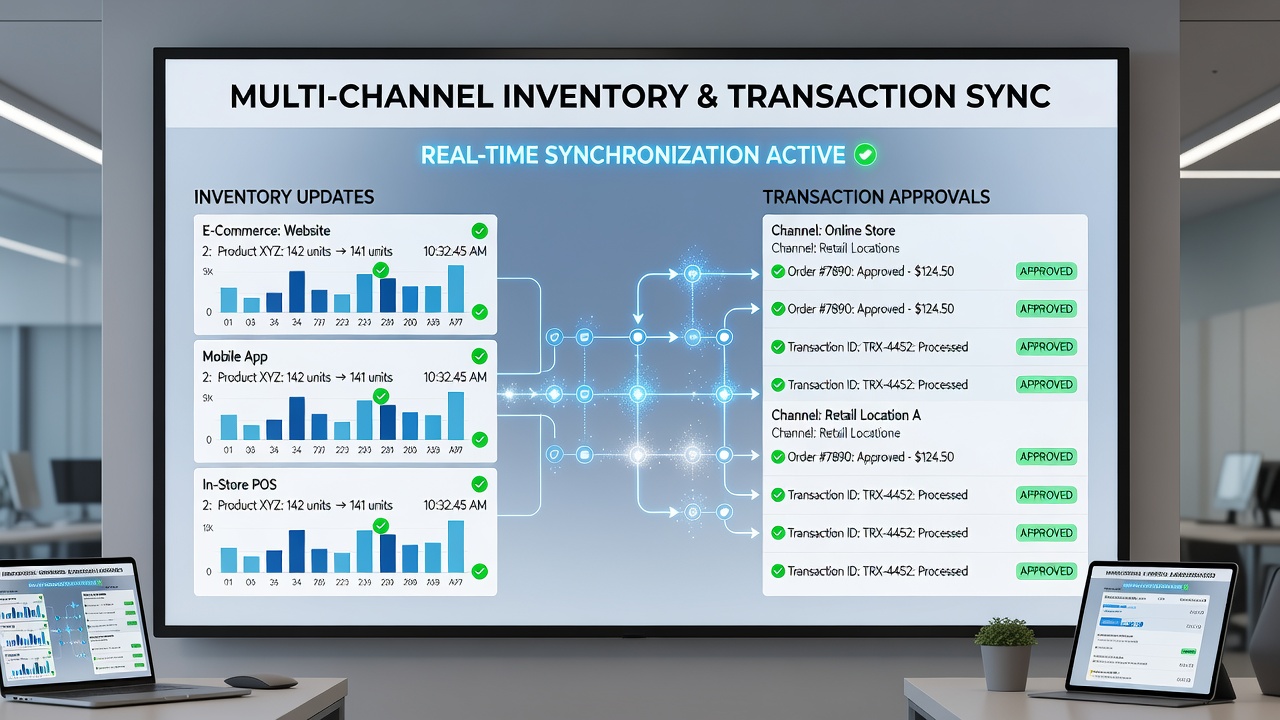
Retail operations that span multiple channels rely on precise coordination between inventory databases and payment authorization systems to prevent discrepancies that lead to overselling or stockouts. Systems process customer orders from websites, mobile apps, and physical locations simultaneously, updating availability counts the moment a transaction receives approval from the issuing bank or processor. This integration reduces errors that occur when separate platforms operate without shared data feeds.
Core Mechanisms Driving Synchronization
Application programming interfaces connect point-of-sale terminals, e-commerce platforms, and warehouse management software so that each approved payment triggers an immediate decrement in available units. Researchers at institutions studying supply chain technology have documented cases where batch processing delays of even a few minutes created mismatches across channels. Real-time protocols replace those older methods by transmitting approval signals directly to central inventory repositories, and observers note that this approach maintains consistency even during peak sales periods.
Multi-channel retailers often deploy middleware layers that translate data formats between legacy systems and newer cloud services. These layers handle the flow of authorization responses while enforcing rules that reserve stock temporarily until the payment clears or fails. Studies from retail technology groups indicate that such temporary holds, lasting seconds rather than minutes, cut the incidence of double-selling by measurable percentages in high-volume environments.
Operational Patterns Observed in August 2026
By August 2026, several large chains had expanded their use of edge computing nodes located near distribution centers to accelerate the round-trip time between transaction approval and inventory adjustment. These nodes receive authorization messages from payment networks and push updates to both online storefronts and in-store handheld scanners without routing everything through a single headquarters server. Data shared by industry associations shows faster recovery from network interruptions when local processing supplements central databases.
Independent retailers adopted similar approaches through software subscriptions that link portable card readers to cloud-based stock trackers. One documented rollout involved a regional grocery operator that synchronized its curbside pickup orders with in-store sales by routing every approval through a unified ledger. The result appeared in reduced customer notifications about unavailable items after purchase confirmation.
Challenges Across Diverse Sales Channels
Disparate data formats between suppliers and retailers create friction points that slow synchronization efforts. A purchase completed on a marketplace app may arrive in a structure incompatible with a brand's internal warehouse system, requiring translation steps that introduce latency. Analysts tracking these operations report that mapping exercises become necessary whenever new sales channels are added.
Network latency and regional payment processor differences add further complexity. Transactions routed through international gateways sometimes experience variable approval times that affect how quickly inventory reflects the sale. Retailers address this by implementing queuing systems that prioritize updates based on channel volume rather than arrival sequence.
Role of Compliance and Data Standards
Security requirements around payment data influence how inventory systems receive transaction details. Tokenization practices replace card numbers with unique identifiers before any stock adjustment occurs, limiting exposure while preserving the link needed for reconciliation. Guidance from standards organizations such as the PCI Security Standards Council outlines acceptable methods for passing approval status without transmitting sensitive elements.
Retailers also reference frameworks from bodies like Innovation, Science and Economic Development Canada when designing audit trails that connect each authorization event to a corresponding inventory change. These trails support both internal reviews and external examinations required in certain jurisdictions.
Conclusion
Effective coordination between inventory updates and real-time transaction approvals depends on reliable connections, standardized data exchanges, and adherence to security protocols across all retail channels. Retailers that maintain these alignments report fewer fulfillment issues and more accurate availability displays for customers. Continued refinements in processing speed and format compatibility support ongoing operations as sales platforms evolve.