Charting Credit Card Authorization Pathways for Recurring Payments in Evolving POS Fraud Landscapes
Yves Brooks · Jul 21, 2026
Charting Credit Card Authorization Pathways for Recurring Payments in Evolving POS Fraud Landscapes
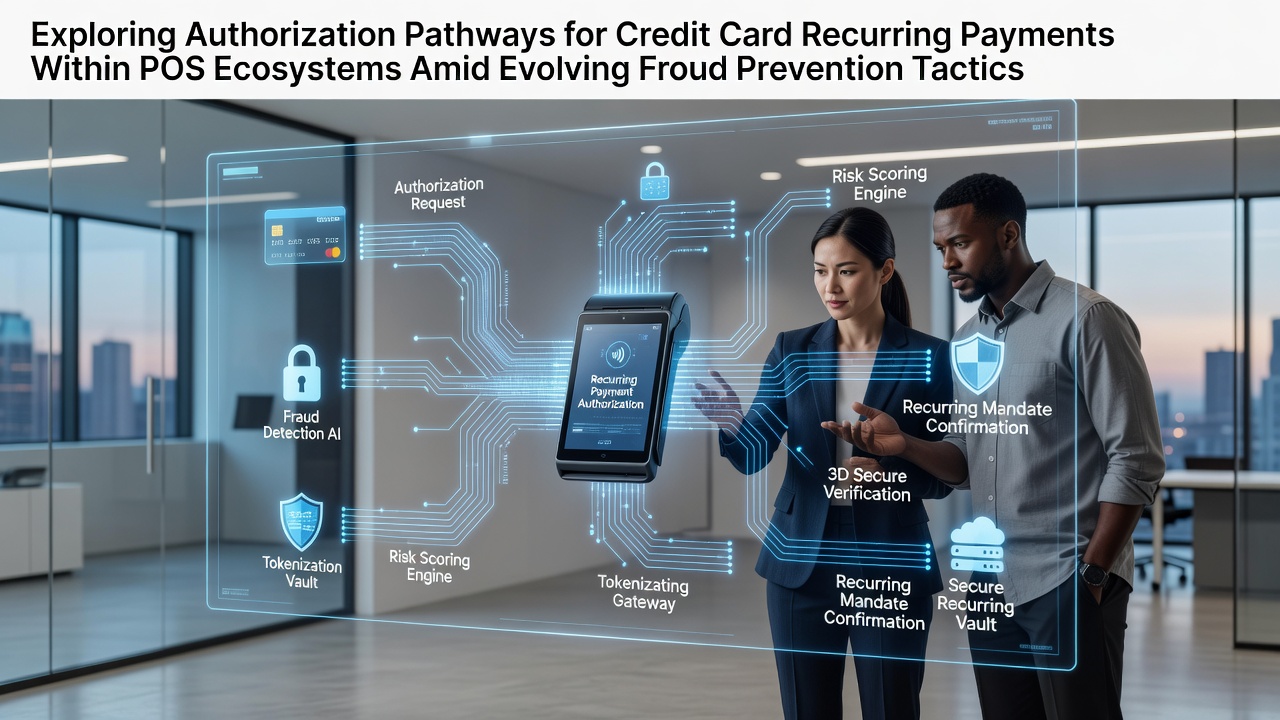
Authorization pathways for credit card recurring payments operate within point-of-sale ecosystems that blend initial transaction approvals with ongoing billing cycles, and these routes continue to adjust as fraud prevention tactics incorporate machine learning models alongside tokenization standards. Observers note that merchants rely on stored credentials and network tokens to handle subsequent charges after the first authorization, which reduces exposure while complying with payment network rules.
Initial Authorization and Token Creation Steps
POS terminals initiate recurring payment setups through a card-present or card-not-present authorization request that captures the cardholder's details and obtains an approval code from the issuing bank, after which the system generates a token that replaces sensitive account data for future use. Research indicates that this process typically occurs during the first customer interaction at the terminal, where the merchant's gateway transmits the request through acquirer networks to card brands, and the response includes indicators for recurring capability when the issuer supports it.
Those managing POS hardware often integrate these steps with payment applications that flag transactions as recurring from the outset, and this designation allows issuers to apply specific risk scoring during the initial check. Data from industry reports shows token provisioning rates increased notably between 2023 and 2025, driven by mandates from major card networks that require token use for stored credentials in many regions.
Subsequent Billing Cycles and Network Routing
Once tokens exist, recurring charges follow a streamlined pathway where the merchant's POS software submits the token along with amount and schedule details through the same acquirer channel, bypassing full card number transmission on each cycle. Experts have observed that these follow-on requests receive authorization decisions based on updated account status, including any changes in card validity or fraud alerts, and the process completes faster than initial authorizations because less data validation occurs.
Integration of Fraud Prevention Layers
Fraud detection systems now embed real-time scoring at multiple points along the authorization route, using device fingerprinting and behavioral analytics at the POS device level while issuers apply their own models on incoming requests. In July 2026 several card networks plan to expand requirements for additional authentication signals during high-risk recurring setups, which will insert new checkpoints into existing pathways without disrupting standard token flows. Studies from payment security organizations reveal that these layered approaches have lowered unauthorized recurring transaction rates in tested markets, particularly when combined with dynamic amount verification.

Merchants encounter routing variations when operating across borders because regional regulations influence how tokens and fraud signals travel through the ecosystem. According to guidance from the European Central Bank, strong customer authentication elements must accompany certain recurring payment modifications, which affects how POS systems in the EU transmit authorization data compared with other markets.
Compliance Considerations in Multi-Channel POS Deployments
POS ecosystems that support both fixed terminals and mobile units must maintain consistent authorization logic across devices, ensuring that token storage and retrieval meet encryption benchmarks set by the PCI Security Standards Council. Observers note that synchronization between these channels prevents mismatches that could trigger declines during recurring cycles, and acquirers often provide unified dashboards to monitor authorization success rates across locations.
Take one vendor network that expanded its POS fleet in 2024 and recorded a measurable drop in retry attempts after aligning its fraud scoring parameters with issuer preferences. Such alignment proves useful when fraud tactics evolve toward synthetic identity patterns that target recurring streams specifically.
Future Adjustments and Network Updates
Payment networks continue to refine authorization message formats to carry richer fraud-related data fields, allowing POS gateways to receive more granular decline reasons that inform retry strategies for recurring payments. Researchers at academic institutions tracking payment flows have documented how these updates improve overall ecosystem resilience without requiring merchants to overhaul their terminal software.
Another link appears in reports from the Reserve Bank of Australia, which outlines expectations for recurring payment transparency that intersect with authorization timing and fraud monitoring protocols. These expectations encourage clearer communication between merchants and cardholders when authorization pathways encounter interruptions.
Conclusion
Authorization pathways for recurring credit card payments within POS ecosystems adapt continuously through token standards, layered fraud scoring, and regulatory alignments that shape data routing decisions. Merchants and processors track these developments to sustain reliable billing cycles while meeting security expectations across different operating environments.