Charting Assistance Routes for Merchant Account Setup in Card Processing Systems and Gateway Protocol Standards
Theo Powell · Jun 6, 2026
Charting Assistance Routes for Merchant Account Setup in Card Processing Systems and Gateway Protocol Standards
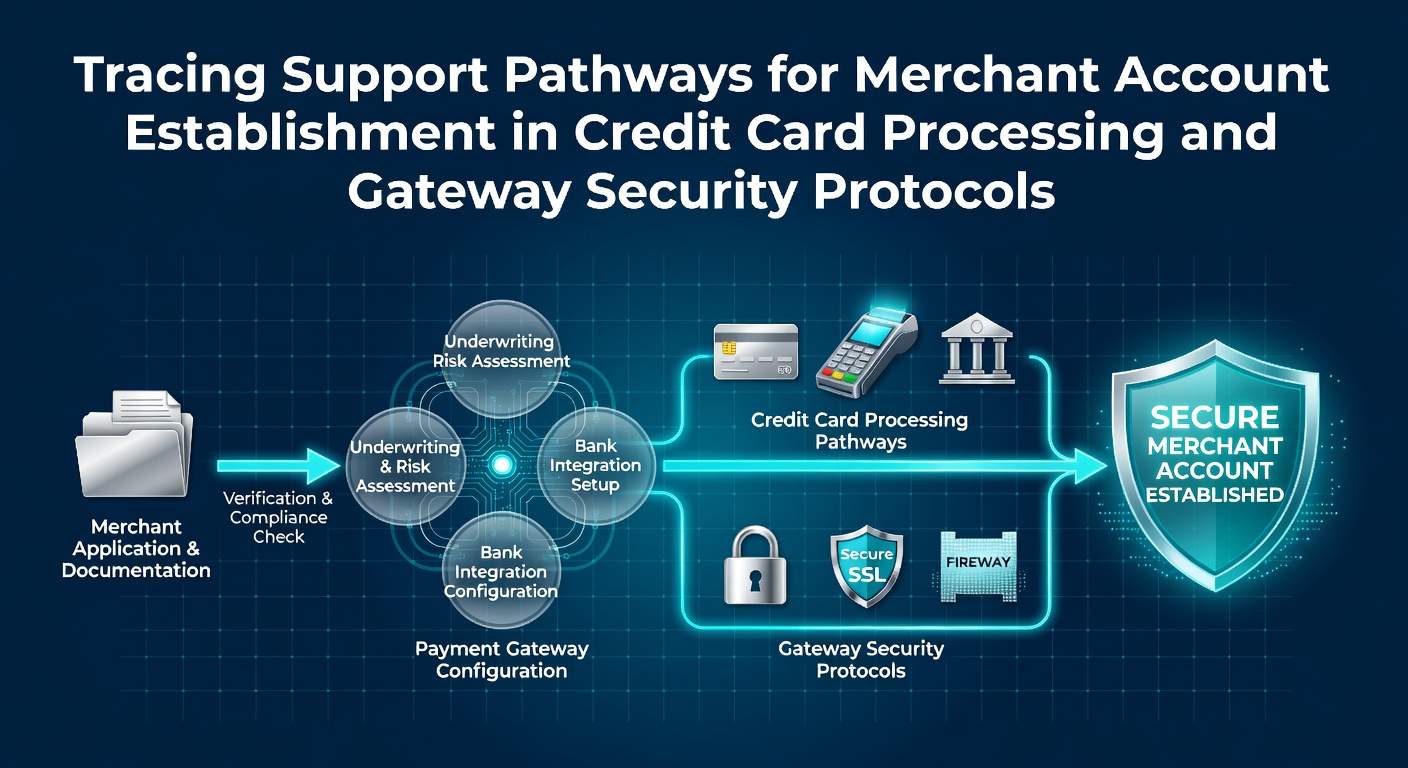
Merchant account establishment begins with identifying the right support channels that connect businesses to acquiring banks and payment processors, where underwriters evaluate risk profiles through documented sales volumes, business histories, and credit assessments that shape approval timelines.
Initial Contact Points and Application Flows
Businesses typically reach out to independent sales organizations or direct processor representatives who guide initial paperwork submissions, and these entities coordinate with banks to verify merchant identities while collecting details on transaction expectations that determine reserve requirements and fee structures.
Support teams often streamline the process by providing templates for financial statements and business licenses, which helps applicants avoid common documentation gaps that delay reviews, whereas regional variations appear when comparing requirements across different financial jurisdictions.
Underwriting Procedures and Risk Evaluation
Underwriters examine submitted data against established criteria that include chargeback ratios and industry classifications, and this phase relies on automated scoring systems supplemented by manual reviews for higher-risk categories such as those involving recurring billing or international sales.
Processors maintain dedicated support lines during this stage to answer queries about additional information requests, while data shows that clear communication from support staff reduces average approval times according to figures from industry tracking services.
Once preliminary approval arrives, merchants proceed to account configuration where gateway providers integrate security layers including encryption standards and tokenization methods that safeguard cardholder information during transmission and storage.
Gateway Integration and Security Protocol Implementation
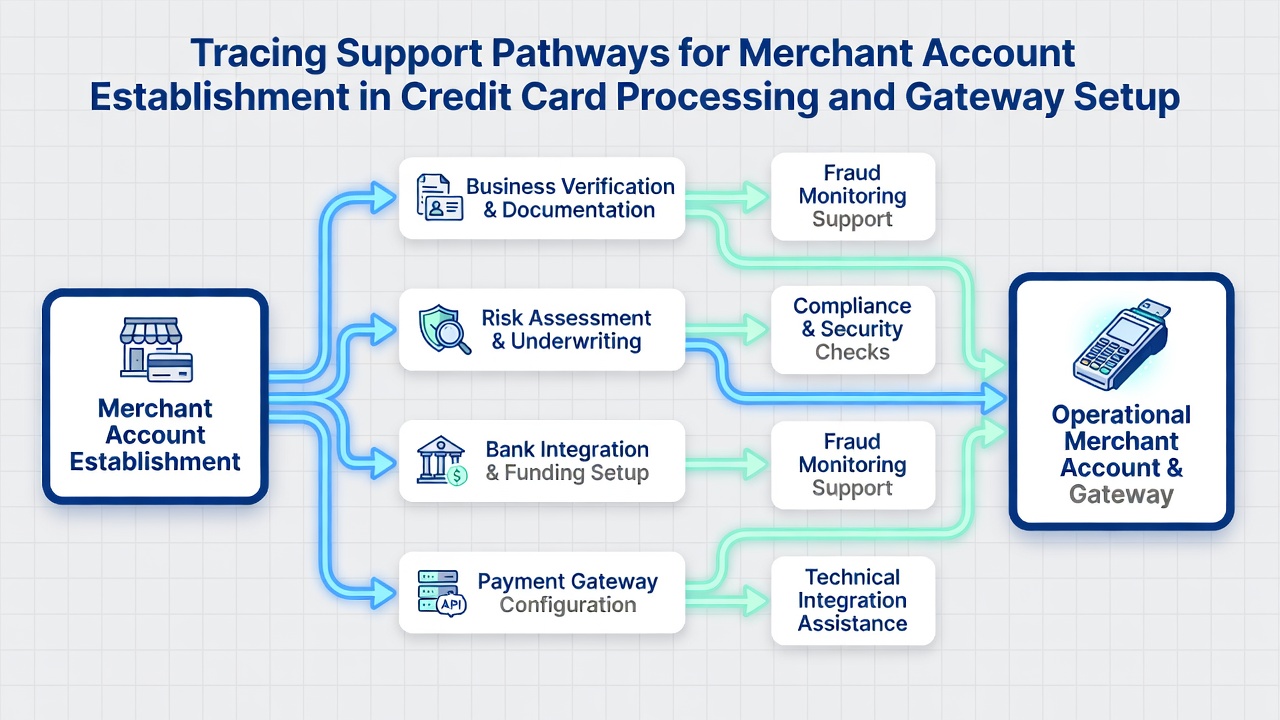
Gateway vendors supply application programming interfaces that developers embed into checkout systems, and these connections enforce compliance with data protection rules through regular audits that verify adherence to established benchmarks for card data handling.
Security teams monitor live transactions for anomalies using pattern recognition tools, and support pathways extend here through technical assistance channels that troubleshoot integration issues while ensuring that encryption keys rotate according to scheduled intervals.
Research from academic institutions has highlighted how layered authentication protocols reduce unauthorized access incidents, and observers note that merchants who maintain ongoing relationships with gateway support teams encounter fewer disruptions during peak processing periods.
Compliance Monitoring Across Jurisdictions
Regulatory frameworks in various regions require periodic reporting of security measures, and assistance comes from compliance consultants who map specific obligations for each market where the merchant operates, such as those outlined in resources from the PCI Security Standards Council and updates issued by Canadian authorities at the Financial Consumer Agency of Canada.
Support documentation often includes checklists for maintaining valid certifications, while June 2026 marks the scheduled rollout of enhanced reporting formats that processors will adopt to align with evolving data exchange standards across North American networks.
Case Examples in Support Pathway Utilization
One regional retailer leveraged processor-provided webinars to navigate underwriting questions about seasonal sales spikes, which led to faster account activation and seamless gateway deployment, and similar patterns emerge when examining how e-commerce platforms coordinate with multiple support tiers to handle high-volume authorization requests.
Independent operators in dynamic markets frequently consult integrated help desks that combine account management with technical gateway oversight, and this unified approach minimizes handoffs between departments that might otherwise extend setup durations.
Conclusion
Effective tracing of support pathways connects merchant account approval stages directly to robust gateway security measures, and businesses that engage these channels systematically achieve compliant card processing environments that adapt to shifting transaction demands over time.